July 24-27----------------> RECAP Lev Exchange Rate: .73 ($40 = 50 Lev) 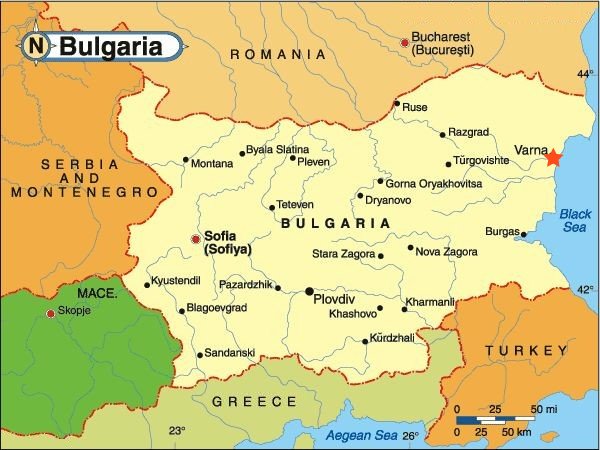 PLANS: WONDERS OF BULGARIA (1430-1845 Friday, 24 July) This tour provides a spectacular introduction to the wonders of nature, ancient history and culture along the Bulgarian Black Sea coast. Depart the pier and travel west of Varna to explore the interesting yet strange-looking geological formation known as the Pobitite Kamuni (Stone Forest). This natural phenomenon is situated about 18 kilometers from the city and is the only preserve of its kind in Europe. This four-square kilometer sandy area is studded with colossal limestone columns in varying forms. It is believed that these strange geological shapes formed 45-50 million years ago when the area was the bottom of a vast shallow inland sea. Geologists agree that the formations occurred naturally but cannot agree on how they were formed. This geological wonder is recognized as a Natural Site of National Significance. Enjoy a short walking tour through this quiet forest and see the bizarre forms that resemble frozen human figures, monsters, truncated cones, fountains and lions. NESSEBAR (0830-1800 Saturday, 25 July) Then continue to the Golden Sands Nature Park, another site of national protection, for a visit to the Aladja Monastery, which is now a memorial of Bulgarian cultural and Christian heritage. Located in a picturesque 14-kilometer wooded area north of Varna, these ruins are one of the few preserved and accessible rock monasteries in Bulgaria. Although Thracians lived in these caves during ancient times, the first Christian hermit settled in the area during the 6th century; these monks resided there until the 18th century. The monks' cells and a small church were hewn out of the soft white-limestone cliff providing a retreat and refuge from the outer world. The 13th – 14th-century frescoes are now faded, though they must have been striking and colorful to earn the monastery its name (Aladja means “multi-colored” in Turkish). After exploring the area, continue along the picturesque Bulgarian Riviera coastline before returning to the ship. Built on a small rocky peninsula, Nessebar is one of the most ancient and picturesque towns in the Balkans. Its narrow cobblestone streets, period wooden houses and medieval churches tell the story of its rich history, which dates back two millennia. Nessebar was founded by Thracians and then colonized by Greek settlers from Megara in the 6th century BCE who named the settlement Mesemvria. Nowadays this living museum town is regarded for its rich cultural heritage and beautiful traditional architecture. The area has been protected since 1987 as a UNESCO World Heritage Site. Enjoy a panaromic drive along the Black Sea coast south of Varna before reaching Nessebar (approximately two hours). Once there, begin a guided-walking tour through the old town, seeing the numerous Byzantine churches, beautiful 19th-century timber-framed houses and the ruins of medieval fortress walls. The ancient basilicas and the ruins are from Hellenistic and Byzantine eras. Visit the Church of Saint Stefan (11th century BCE) with its well-preserved murals and the ancient St. Spas Church. Next, stop at the small Archaeological Museum and explore the “Nessebar through the Ages” exhibit which includes a rich collection of icons from the 13th – 19th centuries. Enjoy some free time to explore the area before returning to Varna.
|
||||
COMMENTS??? click here |
||||
